
ACT Integrated: Process-Based ACT Across Schools and Methods, Los Angeles, February 2027
February 1 to February 2, 2027
11 CE hours
Use the extended psychological flexibility model to integrate across schools and methods in this 2-day, hands-on workshop with ACT originator Steven C. Hayes.
*Early Bird Registration Expires December 26th, 2026*
Join ACT originator Steven C. Hayes for a new two-day workshop on the future of ACT as an integrative clinical practice. The face of the work is the extended psychological flexibility model: open, aware, and engaged, scaled to the body and to relationships, and modified by context.
You will learn to take traditional ACT methods, and other evidence-based processes and kernels, and aim them inside the most modern version of that model. Going beyond the purely psychological level, the extended psychological flexibility, model ads important levels of analysis: the biophysiological level and the sociocultural level. Furthermore the importance of textual control in the very definition of what is flexible or in flexible is emphasized.
Take your ACT practice across schools without sliding into chaotic eclecticism. This workshop emphasizes demonstration and Q and A.
Volunteer positions are available. If interested, reach out to us at staff@ibh.com.
Location
The California Endowment provides an ideal setting for continuing education trainings in the heart of Los Angeles. Its modern, welcoming environment offers a professional and inspiring atmosphere that encourages learning, collaboration, and meaningful connection. Located near downtown Los Angeles, the venue also gives attendees easy access to the city’s diverse neighborhoods, renowned dining, cultural attractions, and entertainment. With its vibrant urban setting, convenient location, and year-round appeal, Los Angeles offers attendees the opportunity to combine a productive continuing education experience with all that Southern California has to offer.
The Center for Healthy Communities at the California Endowment
Trainer
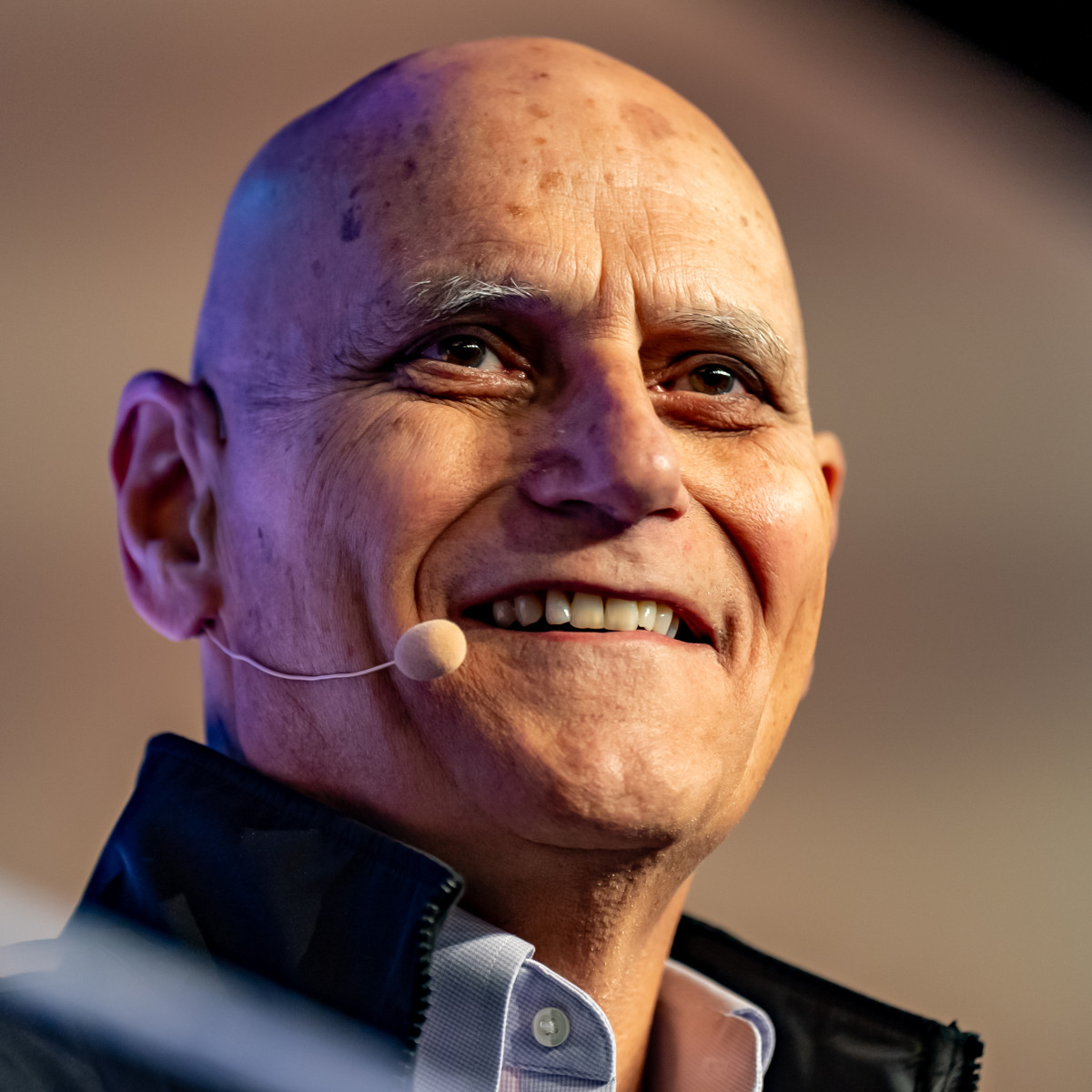
Steven C. Hayes, PhD
Steven C. Hayes is Nevada Foundation Professor Emeritus in Psychology at the University of Nevada, Reno, and President of the Institute for Better Health, a nearly 50-year-old charity dedicated to enhancing mental health care quality. He has authored 48 books and over 700 scientific articles, focusing on human language and cognition to alleviate suffering.
Steven C. Hayes is Nevada Foundation Professor Emeritus in Psychology at the University of Nevada, Reno, and President of the Institute for Better Health, a nearly 50-year-old charity dedicated to enhancing mental health care quality. He has authored 48 books and over 700 scientific articles, focusing on human language and cognition to alleviate suffering.
Hayes earned his Ph.D. in Clinical Psychology from West Virginia University in 1977, followed by a clinical internship at Brown University under David H. Barlow. His academic journey led him from the University of North Carolina, Greensboro, to UNR in 1986, where he served as Director of Clinical Training and later Chair, retiring in 2023.
He has been a prominent figure in behavioral and cognitive behavioral therapy, leading several major psychological associations, including the Association for Behavioral and Cognitive Therapies (ABCT) and the Association for Contextual Behavioral Science (ACBS). Hayes has secured about $15M funding for research and served on the National Advisory Council for Drug Abuse in the NIH.
His contributions have earned him numerous awards, including the Lifetime Achievement Award from the Association for Behavioral and Cognitive Therapy and the James McKeen Cattell Fellow Award from the Association for Psychological Science. He is recognized globally as one of the most influential and highly cited psychologists, ranked by Research.com and AD Scientific Index as among the top 5 clinical psychologists and among the top 25-75 o.
Hayes’s personal battle with panic disorder and agoraphobia catalyzed his development of Acceptance and Commitment Therapy (ACT) in the early 1980s. His work on ACT and Relational Frame Theory (RFT) has since transformed clinical psychology, leading to bestsellers like “Get Out of Your Mind and Into Your Life” and “A Liberated Mind”. Over the last decade, he has pioneered process-based therapy, culminating in three influential books, yet to be encapsulated in a self-help format until now.
Program
Clinicians are drowning in models, manuals, and codes. Clients are not. They want a life that works.
In this two-day, in-person workshop, Steven C. Hayes shows how to use process-based ACT as a foundation for a style of practice that can include almost any evidence-based process of change and almost any evidence-based kernel of intervention, inside a coherent ACT approach. The face of the workshop is the extended psychological flexibility model: helping clients learn to be more open, aware, and engaged, while extending those same skills to their body and to relationships in a text sensitive fashion.
Underneath the extended psychological model is the Extended Evolutionary Meta-Model (EEMM) of process-based therapy as a model of the evidence-based therapy. That model emphasizes variation, selection, and retention, always in context, as the grammar of evolving lives on purpose. PBT is not a new therapy and this is not a deviation form the 40+ year trajectory of ACT – it's merely the next step in its fulfillment. ACT providers can readily step into the extended psychological flexibility model while borrowing from other traditions some of what actually moves a process for this person.
February 1, 2027 | Day 1, Monday
General Session
8:30 a.m.- 4:30 p.m.
5.5 CE Hours
Why the Field is Stuck, and a Map that Can Hold More than One School
The morning is the argument. Moving beyond protocols for syndromes. The map for the territory. Symptom drop without life expansion. Why ensemble averages so often fail the person in the room. Then the extended psychological flexibility model as the face of the work: open, aware, engaged, scaled to the body and to relationships. Levels of analysis as on the slide below — culture and relationships at the top, the six processes in the middle, the body at the bottom, context to the side — and the compact line-symbol as the mark for shifting rapidly from one aspect to another. The EEMM sits underneath as a way of seeing all therapies through the same lens, not as a new therapy but as variation, selection, retention, in context. The therapist and the therapeutic alliance as part of the evolutionary environment.
The afternoon is function. When “good” processes harm: acceptance that is resignation, mindfulness that is threat monitoring, self-compassion that is a fortress. Live work on a PLAN: a small network, arrows as hypotheses, one hub to move. Traditional ACT methods are shown as process moves, not protocol steps. Demonstration and Q and A throughout.
- 8:30 a.m.- 9:00 a.m.
Check-in (Lobby of The Center for Healthy Communities at the California Endowment) - 9:00 a.m.- 10:30 a.m.
The Stall: Syndromes, Manuals, and What Clients Actually Want - 10:30 a.m.- 10:45 a.m.
Morning Break - 10:45 a.m.- 12:00 p.m.
Extended Psychological Flexibility Model; Levels of Analysis; EEMM as Grammar - 12:00 p.m.- 1:30 p.m.
Lunch Break - 1:30 p.m.- 3:00 p.m.
When Helpful Processes Harm; Live PLAN - 3:00 p.m.- 3:15 p.m.
Afternoon Break - 3:15 p.m.- 4:30 p.m.
February 2, 2027 | Day 2, Tuesday
General Session
8:30 a.m.- 4:30 p.m.
5.5 CE Hours
Aim the Kernel, Integrate the School, Keep the Stance
The morning is translation. Same intervention, different evolutionary job over time. How to read a method you already use (CBT, EMDR, Schema, EFT, Gestalt, psychodynamic, and others) as a process, in a level of analysis, and as a variation / selection / retention function. Live discrimination: same presenting words, different process needs.
The afternoon is practice. Pick a kernel from outside traditional ACT and aim it at a named process inside the extended flexibility model. Indicators you will actually watch. Therapist traps (e.g., certainty, over-validation) and the stance: instigate, model, and reinforce psychological flexibility, from it, toward it, and with it. Close with a next-week experiment, not a new protocol. Demonstration and Q and A throughout.
- 8:30 a.m. - 9:00 a.m.
Check-in (Lobby of The Center for Healthy Communities at the California Endowment) - 9:00 a.m. - 10:30 a.m.
Techniques as Trajectories; Same Method, Different Function - 10:30 a.m. - 10:45 a.m.
Morning Break - 10:45 a.m. - 12:00 p.m.
Translating Other Schools Intro Process, Level, and Evolutionary Job - 12:00 p.m. - 1:30 p.m.
Lunch Break - 1:30 p.m. - 3:00 p.m.
Choosing a Kernel; Knowing it Worked for this Person - 3:00 p.m. - 3:15 p.m.
Afternoon Break - 3:15 p.m. - 4:30 p.m.
Stance, Traps, Next-Week Experiment; Demonstration and Q&A
Learning Objectives
DAY 1
- Distinguish a DSM- or protocol-based starting point from a functional, process-based formulation of the same presenting complaint.
- Describe the Extended Evolutionary Meta-Model as a lens (not a new therapy), including variation, selection, and retention in context.
- Describe the extended psychological flexibility model as a level-stack: relationships and culture at the top, the six psychological processes in the middle, the body at the bottom, and context to the side.
- Define a process of change and distinguish it from a kernel (a small intervention element that can move a process under certain conditions).
- Map a client onto the extended psychological flexibility model: open, aware, and engaged, extended to the body and to relationships.
- Build a brief PLAN of a small set of common sense nodes, treat relationship arrows within a PLAN network as hypotheses, and select one hub node or hub arrow to work.
- Evaluate a commonly “helpful” process (acceptance, mindfulness, self-compassion, or reappraisal) by whether this person’s life is expanding or contracting, not by symptom slope alone.
DAY 2
- Translate one intervention they already use from another evidence-based school into a process, a level (psychological, biological, or sociocultural), and an evolutionary function (variation, selection, or retention).
- Identify a characteristic trap of that school when it is used without a process map.
- Select a kernel from outside traditional ACT to move a named process inside an extended psychological flexibility model.
- State at least one idiographic indicator (a countable node or a 0–10 process rating) they will use as practice-based evidence.
- Discriminate two clients with similar presenting language who need different process moves.
- Notice one of their own therapist traps and replace it, in the room, with a process question.
- Design a short next-week experiment: one kernel, aimed at one arrow, with one way of knowing whether to keep it.
Recommended Reading
These texts are not prerequisites to attend the training. However, should you like to deepen your understanding of ACT and its core processes, the following are useful:
- Hayes, Steven C, et al. Acceptance and Commitment Therapy: The Process and Practice of Mindful Change. 2nd ed., Guilford Press, 2012.
- Hofmann, Stefan G., et al. The Process-Based Therapy Workbook for Clinicians. 2021.
- Hayes, Steven C. BEYOND THE DSM : Toward a Process-Based Alternative for Diagnosis and Mental Health Treatment. Readhowyouwant, 2021.
- Hayes, Steven C. LIBERATED MIND : How to Pivot toward What Matters. Avery, 2020.
References
Hayes, S. C. (2019). A Liberated Mind. Penguin/Avery.
Hayes, S. C., Hofmann, S. G., & Ciarrochi, J. (2023). The idionomic future of cognitive behavioral therapy: What stands out from criticisms of ACT development. Behavior Therapy, 54(6), 1036-1063. DOI: 10.1016/j.beth.2023.07.011
Hayes, S. C., Ciarrochi, J., Hofmann, S. G., Chin, F., & Sahdra, B. (2022). Evolving an idionomic approach to processes of change: Towards a unified personalized science of human improvement. Behaviour Research and Therapy, 156, 104155. DOI: 10.1016/j.brat.2022.104155
Hayes, S. C., Hofmann, S. G. & Wilson, D. S. (2020). Clinical psychology is an applied evolutionary science. Clinical Psychology Review, 81, 101892. DOI: 10.1016/j.cpr.2020.101892
Hayes, S. C., Hofmann, S. G. & Ciarrochi, J. (2020). A process-based approach to psychological diagnosis and treatment: The conceptual and treatment utility of an extended evolutionary model. Clinical Psychology Review, 82, 101908. DOI: 10.1016/j.cpr.2020.101908
Something Came Up? Don’t Worry!
We are happy to issue you a refund anytime before the event. However, we do charge a service fee of approximately 3% for cancellations. This is simply to cover banking transaction fees that we have no other way of recouping. If you need a refund, simply go to ibh.com/refunds, fill out the form, and we will issue your refund within 1-3 business days.